2MW Solar System in Nigeria, Built for Campus-Scale Load
A fully installed 2MW hybrid solar system typically costs ₦680,000,000–₦870,000,000 in Nigeria, sized for large single-site plants, multi-building campuses, or clustered facilities under one power plan. This page covers what's actually in a 2MW system, what it can power, and how long install takes.
Specs last verified: 2026-08-08. For a full line-by-line price breakdown, see the 2MW price breakdown page.
₦680M–₦870M
typical fully-installed price
10 yr
panel & workmanship warranty
30–38 wks
typical install time
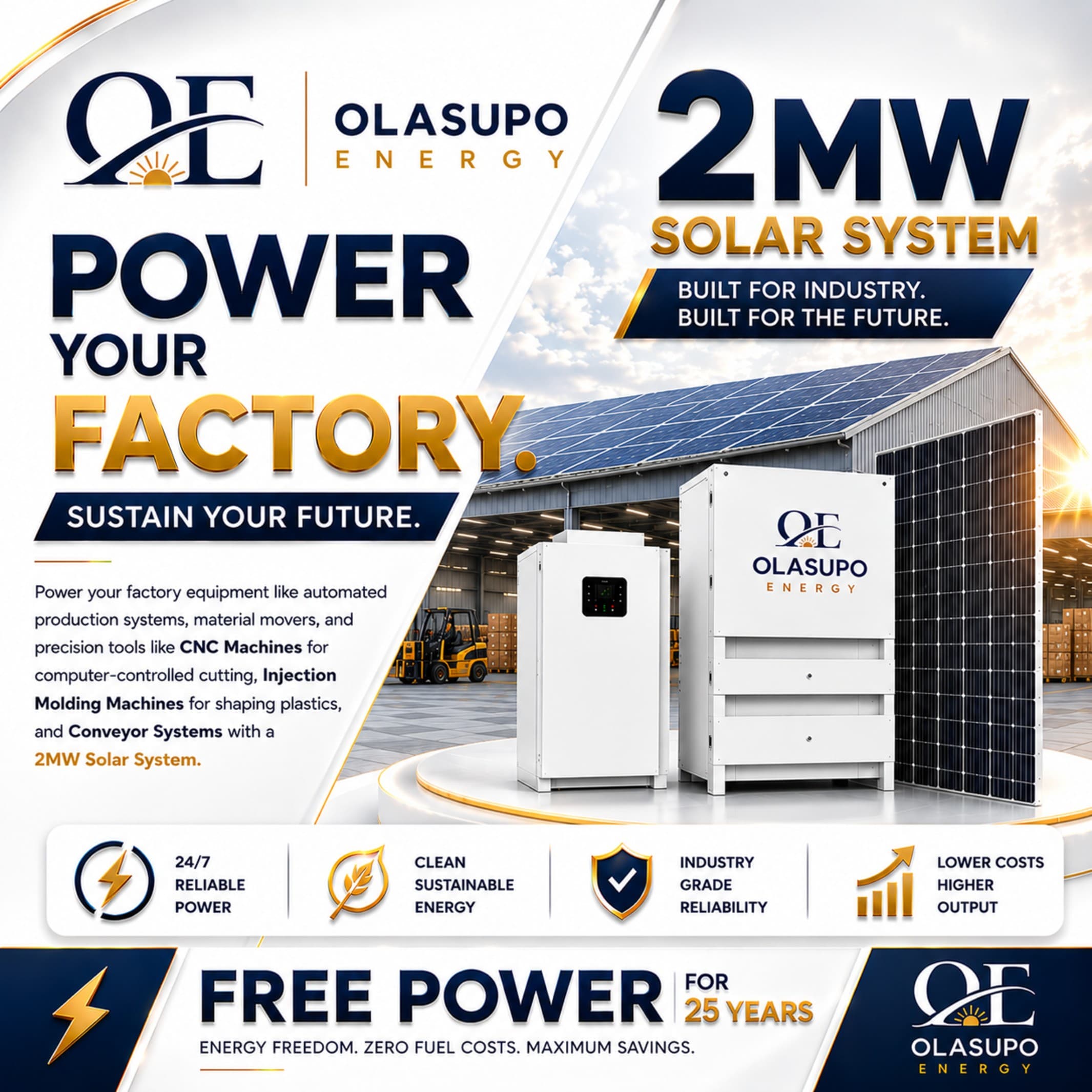
What's in a 2MW Hybrid System
Specs below are for a standard 2MW hybrid install with a mid-range battery bank (≈4,000kWh). Battery capacity is the main variable — smaller or larger banks change backup hours and total footprint.
| Component | Typical spec |
|---|---|
| Solar panels≈3,640 × 550W monocrystalline panels | ≈2,002kW array |
| Hybrid inverter2,000kVA three-phase, utility-scale config | 2MVA |
| Battery storageLithium-ion, mid-range backup tier | ≈4,000kWh |
| Roof/ground footprintSpace needed for panel array only | ≈11,000–13,000 m² |
| Mounting structureGround-mount racking, or split across multiple roofs | Galvanized steel |
| Estimated daily outputAverage generation, Nigerian irradiance | ≈8,600–9,400 kWh/day |
| Panel & workmanship warrantyCovers panels, inverter, and install workmanship | 10 years |
Specs are typical figures based on Olasupo Energy installed-project data, 2026-08-08. Panel count, roof/ground footprint, and battery sizing shift with your actual load profile and site. Ask us for an exact specification against your site.
What a 2MW System Can Power
2MW is where most single-site operations top out before a project moves into a bespoke multi-array configuration.
Large industrial plants
Cement, steel, plastics, or textile operations with heavy continuous motor and compressor loads.
Corporate & institutional campuses
Multi-block office campuses, university campuses, or research parks with shared central power needs.
Large cold chain & food processing
Bigger refrigeration fleets and processing lines that can't tolerate power interruptions without heavy stock loss.
Resort & multi-property hospitality
Resort complexes or hotel groups with several buildings on one shared grid connection.
Hospital campuses
Multi-block hospital or teaching hospital campuses needing stable power across wards, theatres, and diagnostics.
Mining & extraction sites
Remote or off-grid extraction sites running heavy equipment where diesel logistics are the main cost driver.
Not sure if 2MW is the right size for your load? Send us your current diesel or grid bill on WhatsApp and we'll size it properly — sometimes the right answer is 1.5MW, sometimes it's 3MW.
Price Range at a Glance
A fully installed 2MW hybrid system runs ₦680,000,000–₦870,000,000, equipment and installation included. The main things that move it within that range:
Battery capacity
The biggest single lever — a 2,000kWh bank costs meaningfully less than a 6,000kWh bank at the same panel and inverter size.
Site condition
Ground-mount vs rooftop, existing structural strength, and ease of access all shift labor and mounting costs.
Cable run distance
Longer runs between the array, inverter, and switchboard mean more cabling and higher labor hours, especially across a multi-building site.
Load profile
Continuous 24-hour loads need larger inverters and batteries than daytime-only operations, raising the total.
2MW Solar vs. an Equivalent Diesel Setup
A rough monthly comparison for a site currently running a pair of 800–1000kva diesel generators through an 8–10 hour working day.
| Cost item | Diesel generators | 2MW solar |
|---|---|---|
| Monthly fuel cost | ₦32M–₦48M (two 800–1000kva units, 8–10 hrs/day) | ₦0 fuel cost |
| Monthly maintenance | ₦1.2M–₦2.2M (servicing, oil, parts) | Minimal — panel cleaning, periodic checks |
| Generator lifespan | 5–8 years under heavy daily use | 20+ years for panels; 10 yrs workmanship warranty |
| Noise & emissions | Continuous noise and diesel exhaust | Silent, no emissions |
Estimates only — your actual diesel spend depends on fuel price at time of purchase, generator condition, and load factor. Use the calculator below for numbers based on your own current spend.
Install Timeline: 30–38 Weeks
A 2MW system takes longer than a 1MW install mainly because of equipment lead time at scale and a larger civil/mounting scope, often across a bigger or multi-building site.
Site survey & system design
3–4 weeksLoad audit, roof/ground assessment across the full site, and final engineering drawings signed off before ordering equipment.
Equipment procurement
10–14 weeksPanels, inverter, and battery bank ordered and shipped — the single longest step at this scale.
Civil & mounting works
6–8 weeksFoundation work (if ground-mount), racking installation across the array, and site preparation.
Electrical installation & wiring
7–8 weeksDC/AC cabling, combiner boxes, protection gear, and switchboard integration, often across multiple buildings.
Commissioning & handover
3–4 weeksLoad testing, monitoring setup, staff walkthrough, and handover documentation.
Ways to Pay for a 2MW System
Almost no client pays ₦775M upfront — here's how our clients typically structure it.
Full Upfront Payment
Pay the full installed cost at commissioning. Lowest total cost, and savings start immediately from month one.
Staged Payment Plan
Split into deposit, mid-install, and commissioning payments. No interest, spread across the 30–38 week build.
Lease-to-Own Financing
Monthly payments structured below your current diesel spend, so cash flow improves from day one. Available through select partners — ask us for current terms.
What Would a 2MW System Save You?
Enter your current diesel and electricity spend to see your exact payback period and 10-year saving on a 2MW system.
Commercial Solar ROI Calculator
See exactly how much your business saves by going solar
SELECT FACILITY TYPE
We've Sized and Built Systems Like This Before
2MW is our top utility-scale tier — here's the kind of work that size of client gets from us.
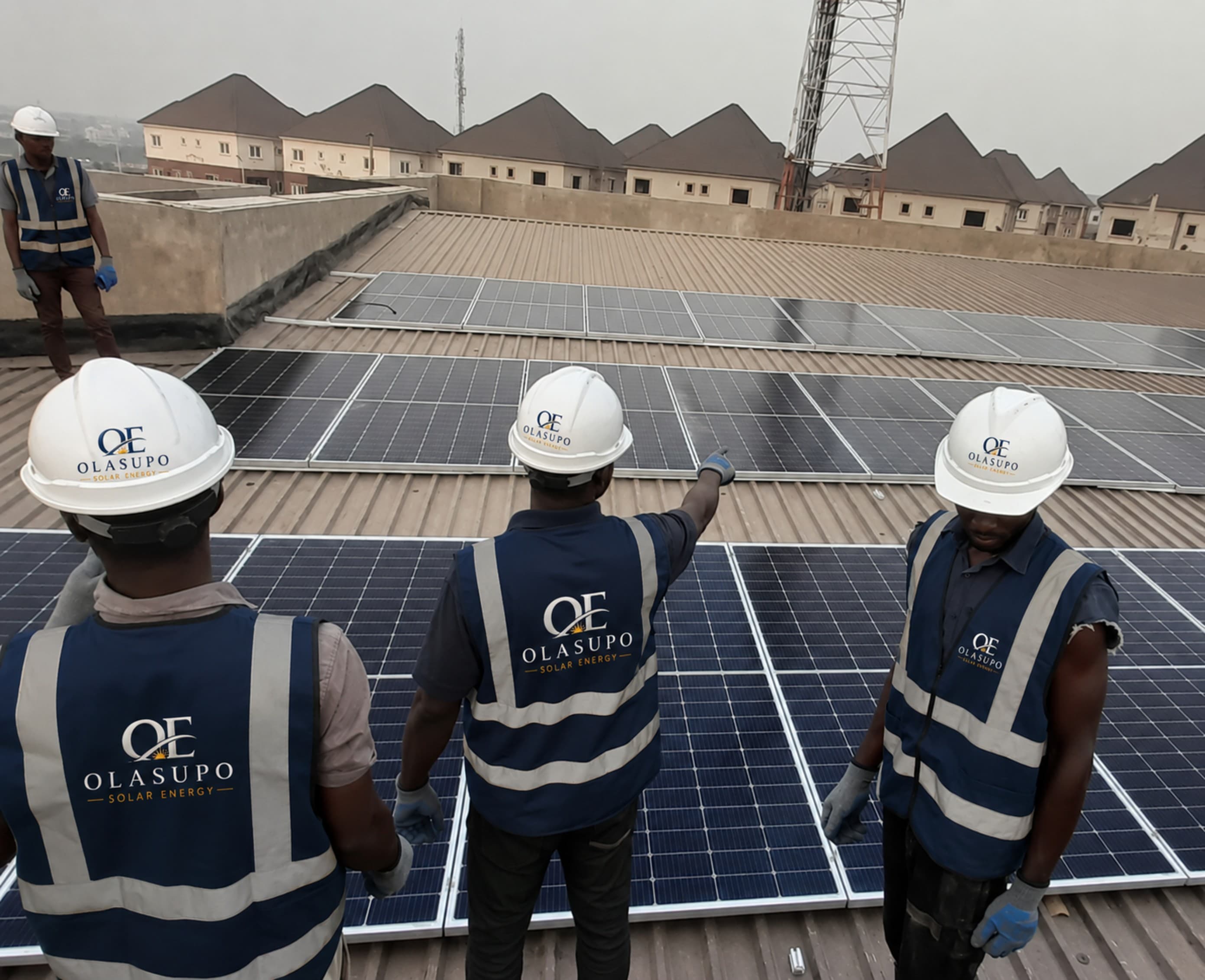
Home Solar
Rooftop solar systems that keep lights, fans, fridges, and home offices running through outages — sized to your household's real daily usage, not a generic package.
Backup power for essential appliances during grid outages
Battery storage sized to your household's overnight needs
Installed and commissioned by our own certified technicians
3–7 days
typical install time
10+ yrs
warranty coverage
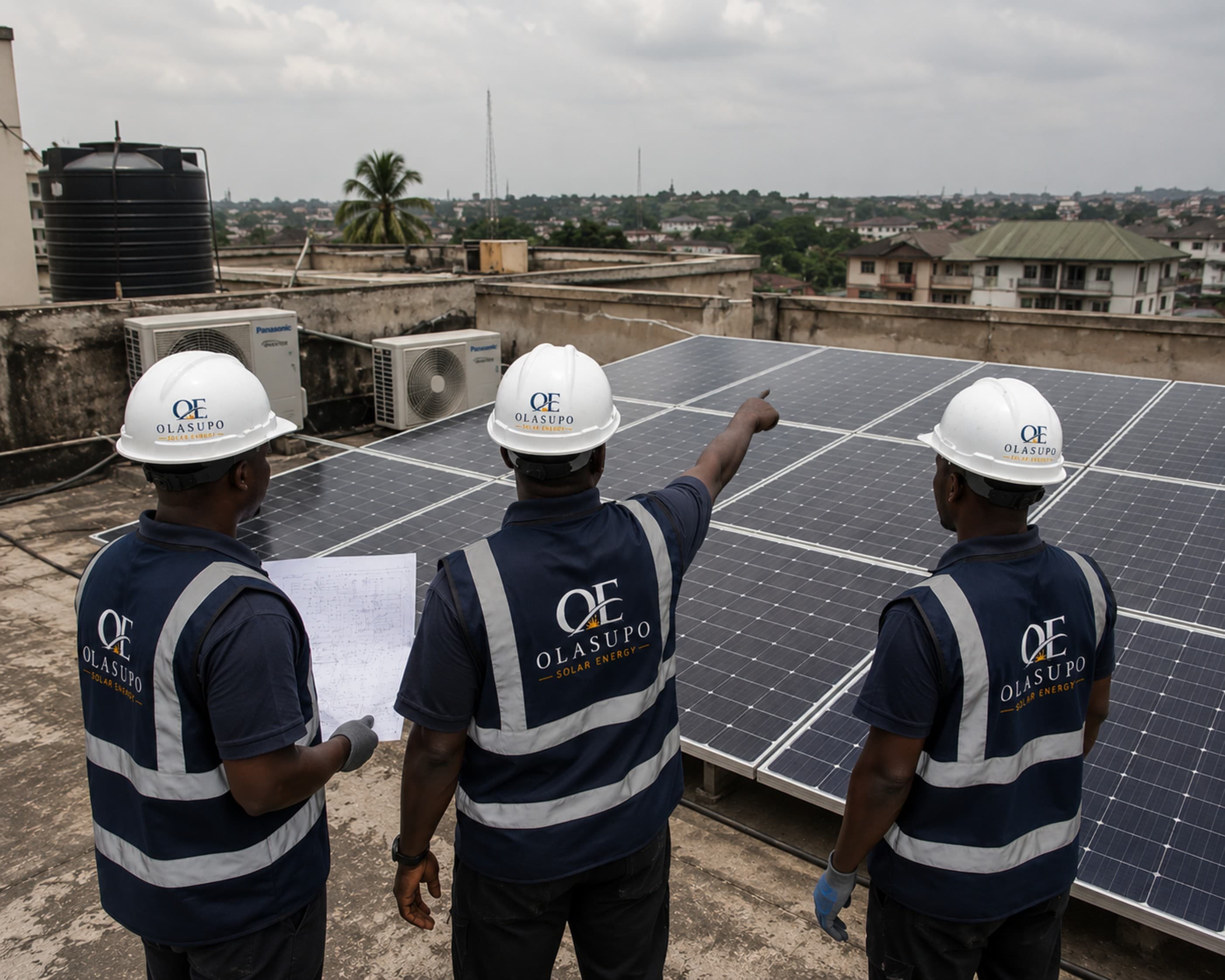
Business & Commercial
Shops, offices, hotels, and salons running on solar instead of diesel — cutting daily generator costs while keeping operations online through every outage.
Designed around your peak operating hours and equipment load
Reduces or eliminates daily diesel generator running costs
Flexible financing available with little to no upfront cost
18–30 mo
typical payback
100%
uptime through outages
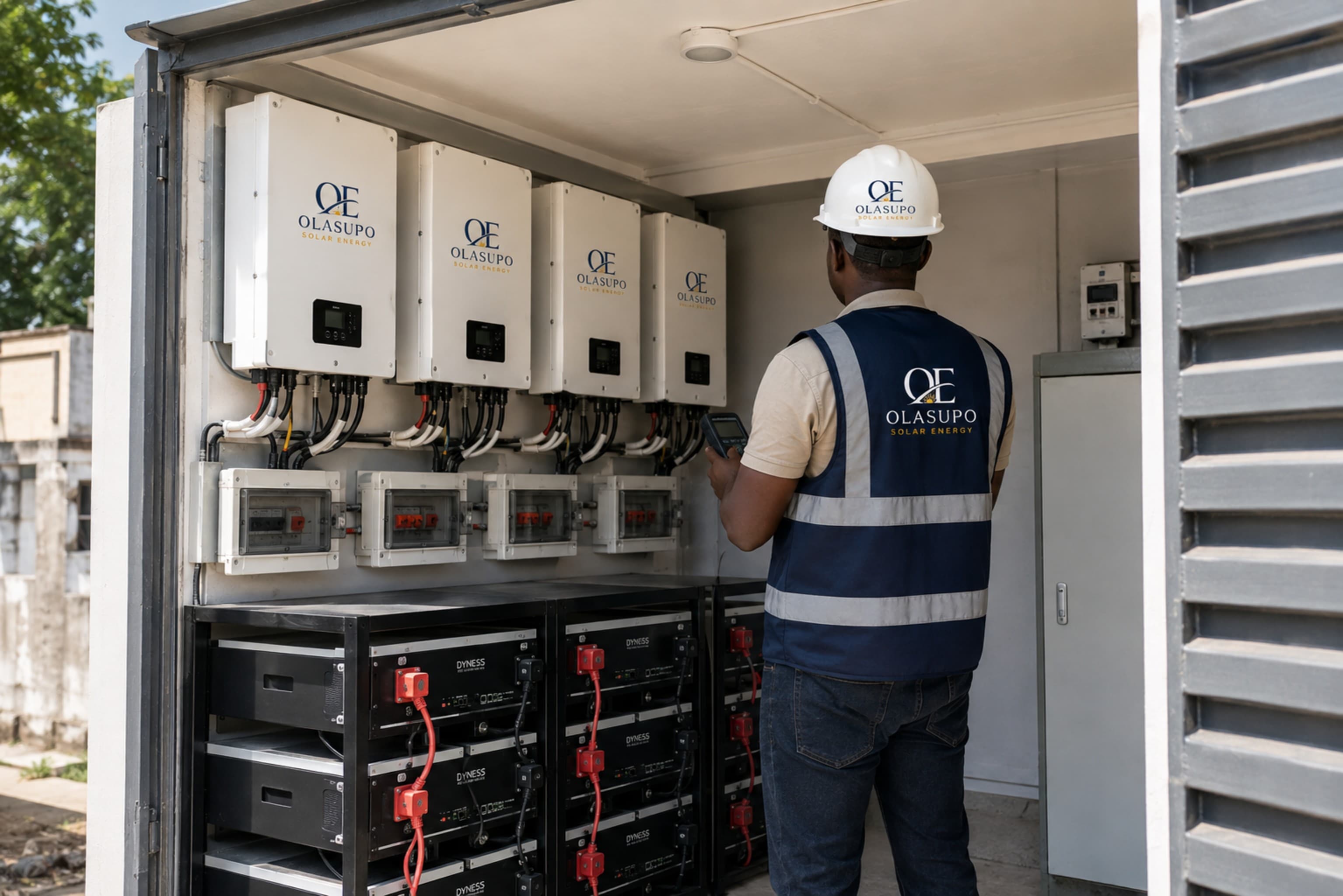
Farms & Agribusiness
Irrigation pumps, cold rooms, and milling equipment powered without fuel — protecting perishable stock and keeping farm operations running on schedule, rain or shine.
Solar-powered irrigation pumps that run without diesel refills
Cold storage kept online to protect perishable harvests
Sized for milling, drying, and other processing equipment
0
diesel refills needed
20+ yrs
panel lifespan
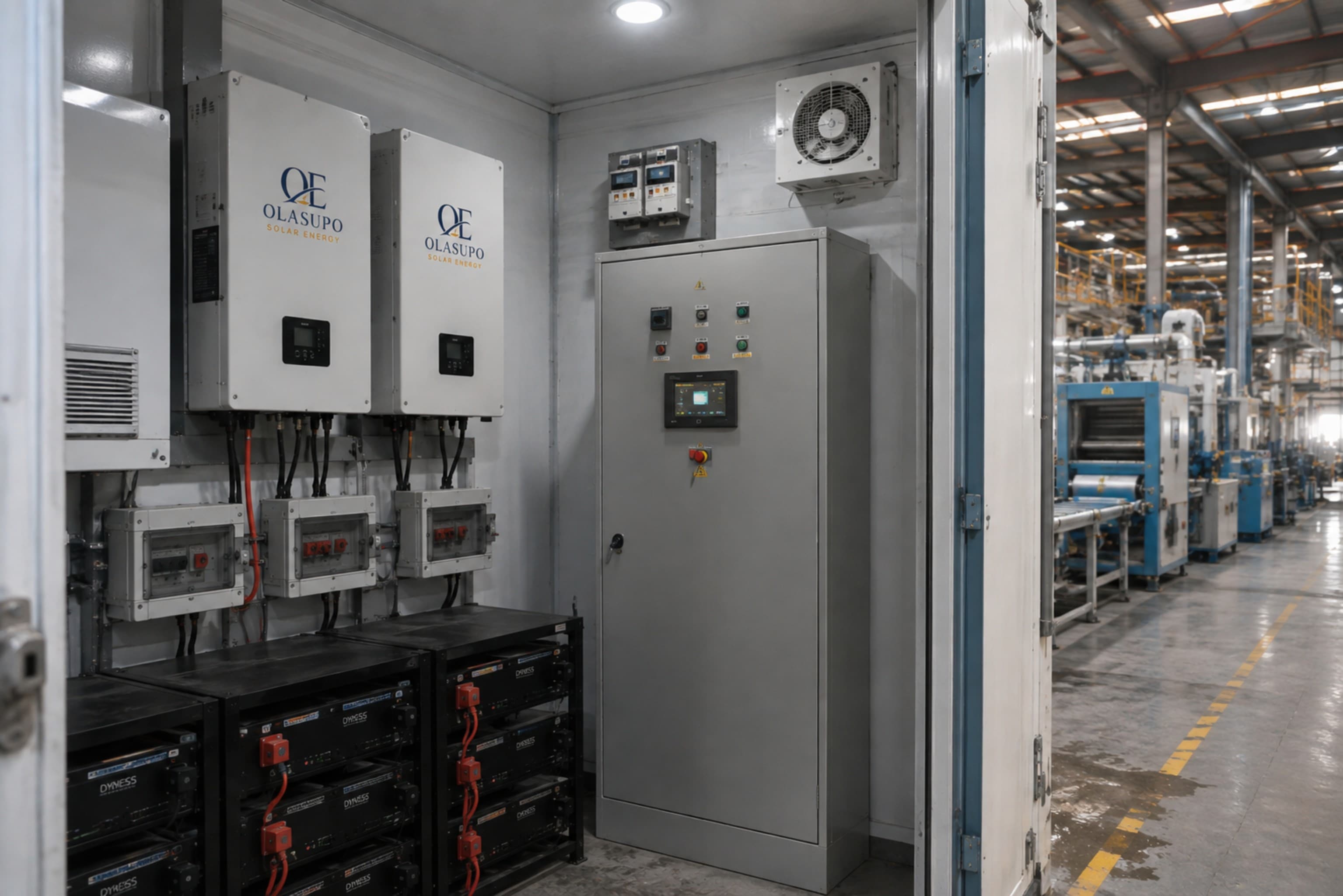
Manufacturing & Factories
Full production lines and heavy machinery on hybrid solar systems — engineered in-house for factory-scale loads, from 100kw sites up to multi-megawatt installations.
Systems sized from 100kw up to 5MW for industrial loads
Installed with zero interruption to ongoing production
Hybrid battery and inverter setup for round-the-clock power
100kw–5MW
system range
8–12 wks
install time (500kw)
What 2MW Clients Say
"We were running two large generators around the clock before this. Sizing the inverter and battery bank against our actual production data, not a generic multiple, made the difference."
Chidi Anyanwu
Group Head of Operations, Cement Manufacturing, Kogi State
"Coordinating install across several buildings on a live campus was the hard part, and the team phased the work block by block so operations never fully stopped."
Aisha Suleiman
Estate Manager, Corporate Campus, Abuja
"The load audit before quoting caught details our own team had missed, which meant the final system actually matched what our lines draw during a full production run."
Obinna Chukwu
Chief Engineer, Steel Processing Plant, Delta State
Reviews collected directly from Olasupo Energy clients. Names and businesses shown with permission.
2MW Solar System — Common Questions
Is a 2MW system just two 1MW systems combined?
Not usually. A 2MW system typically uses larger inverters and a shared battery bank sized for the combined load, which is usually more efficient to install and maintain than running two independent 1MW systems side by side.
Why is there such a wide price range (₦680M–₦870M) for a 2MW system?
The range mostly reflects battery capacity choice. A smaller battery bank for daytime-only backup sits at the lower end; a larger bank for overnight or 24-hour backup sits at the upper end. Site conditions and cable run length across the site also move the number within that range.
How much roof or land space does a 2MW system need?
Roughly 11,000–13,000 m² for the panel array alone, depending on panel wattage and row spacing. Many 2MW installs split the array across multiple roofs or a mix of roof and ground-mount space.
How long does a 2MW install actually take?
Typically 30–38 weeks end to end, with equipment procurement (10–14 weeks) usually the longest single step. Civil works, wiring, and commissioning can partly overlap once equipment starts arriving.
Is financing available, or do I need to pay the full amount upfront?
Most clients at this size use a staged payment plan tied to project milestones, and some qualify for lease-to-own financing through our partners. Full upfront payment gets the lowest total cost if cash flow allows it.
Want an Exact Spec and Price?
Send us your load profile and land or roof space on WhatsApp. We'll return a real, itemized quote for a 2MW system — free, no obligation.
WhatsApp Olasupo Energy