Commercial Solar Installation for Nigerian Businesses — Without the Reseller Tax
Diesel prices doubled. Reseller markups didn't budge. Olasupo Energy cuts both out — our own engineers design your system, we source the equipment direct, and our own crews install and commission it. No subcontractors, no middlemen.
80%
Diesel cost eliminated
In-House
Design, supply & install
6
Industries served
Diesel Was Always Expensive. Now It's Unsustainable.
When the federal government removed the fuel subsidy, diesel didn't just get pricier — it broke the math a lot of Nigerian businesses had been running on for a decade. Generators that used to feel like a manageable overhead now show up as one of the biggest line items on the P&L, right behind rent and payroll.
Solar fixes the economics permanently, but most business owners we talk to have already tried to get a quote and given up — three resellers, three wildly different numbers, each one adding their own markup on top of undersized, generic equipment. That's the gap Olasupo Energy closes: we design, source, and install every system ourselves, so there's no markup layer and no handoff to a subcontractor you've never met.
₦3.5M–₦5M
Typical monthly diesel spend we see
200%+
Diesel cost increase since subsidy removal
0
Reseller markups — we design & install ourselves
If Your Business Runs on Diesel, We've Probably Solved This
We don't do home solar, and we don't spread ourselves across a dozen unrelated services. Every facility type below has different load patterns and a different definition of "right-sized" — which is why we treat each one separately instead of selling one generic system to everybody.

Factories & Manufacturing
100kw to 5MW systems built around production schedules, not guesswork.

Hotels & Hospitality
Hybrid systems that keep guests from ever noticing a power cut.

Hospitals & Clinics
Zero-tolerance uptime for equipment that can't afford to blink.

Schools & Universities
Lower overhead now, so tuition doesn't have to absorb diesel costs later.

Real Estate Developers
Estate-wide power planned in at the blueprint stage, not bolted on after.
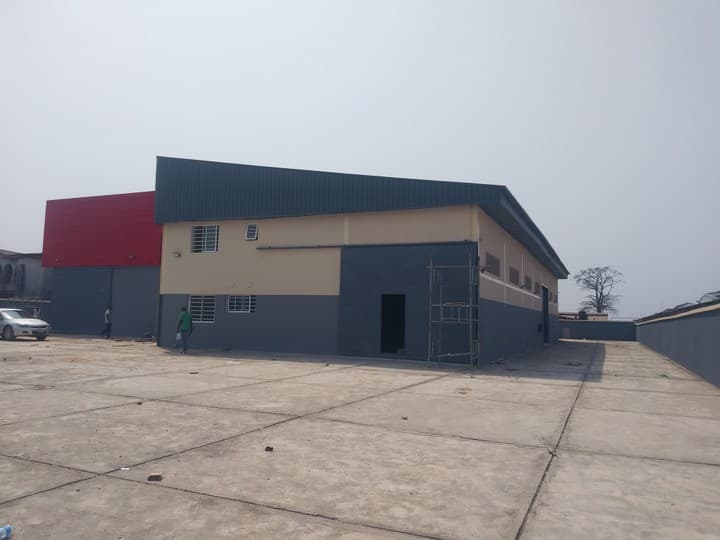
Warehouses & Logistics
Cold-chain and distribution power that doesn't depend on fuel deliveries.

Designed, Supplied, and Installed — In-House
Most Nigerian businesses overpay for solar because they buy through resellers who layer markup on top of generic, undersized systems, then hand installation off to a subcontractor with no long-term stake in the result. Olasupo Energy is a commercial solar company, not a broker — we design every system ourselves, source the equipment, and install and commission it with our own engineers.
In-house engineering & design
Our engineers size and design every system to your facility's exact load — not a generic off-the-shelf package.
Sourced direct from manufacturers
We buy panels, inverters, and batteries direct from tier-1 manufacturers, cutting out reseller markup on your system.
Installed by our own crews
Our certified technicians install and commission every project — we don't subcontract to installers you've never met.
Warranty & maintenance, in-house
Every system carries our workmanship warranty, and our team handles ongoing monitoring and maintenance after commissioning.
Get the Number First
You shouldn't have to sit through a sales call to find out if this makes financial sense. Enter what you're currently spending on diesel and get a straight answer — savings, payback period, 10-year total — in under a minute.
Run My Numbers →Systems We've Designed, Supplied, and Installed
A look at solar systems we've built ourselves across Nigeria — from single homes to full factory floors. Every install below was done by our own team, start to finish.
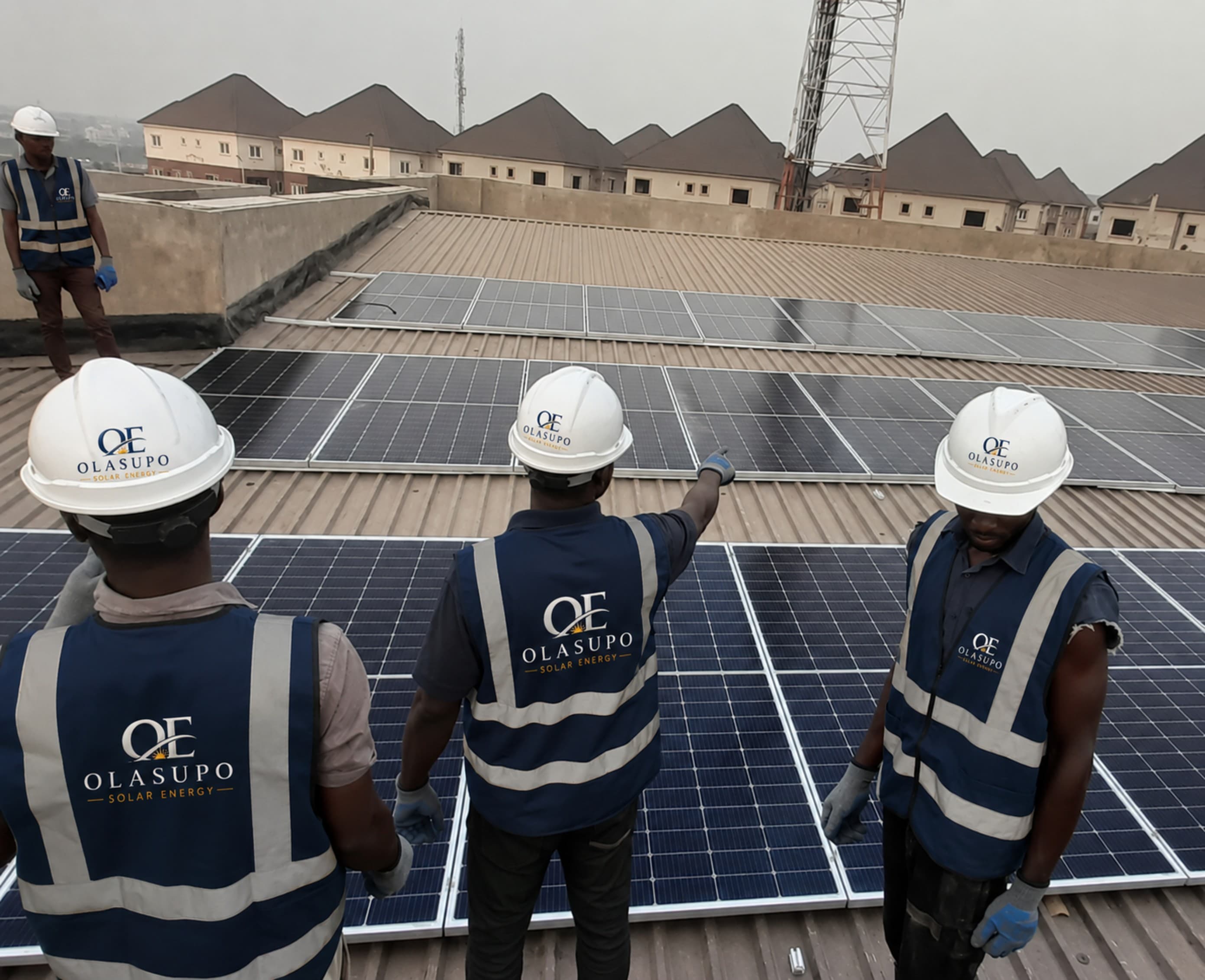
Home Solar
Rooftop solar systems that keep lights, fans, fridges, and home offices running through outages — sized to your household's real daily usage, not a generic package.
Backup power for essential appliances during grid outages
Battery storage sized to your household's overnight needs
Installed and commissioned by our own certified technicians
3–7 days
typical install time
10+ yrs
warranty coverage
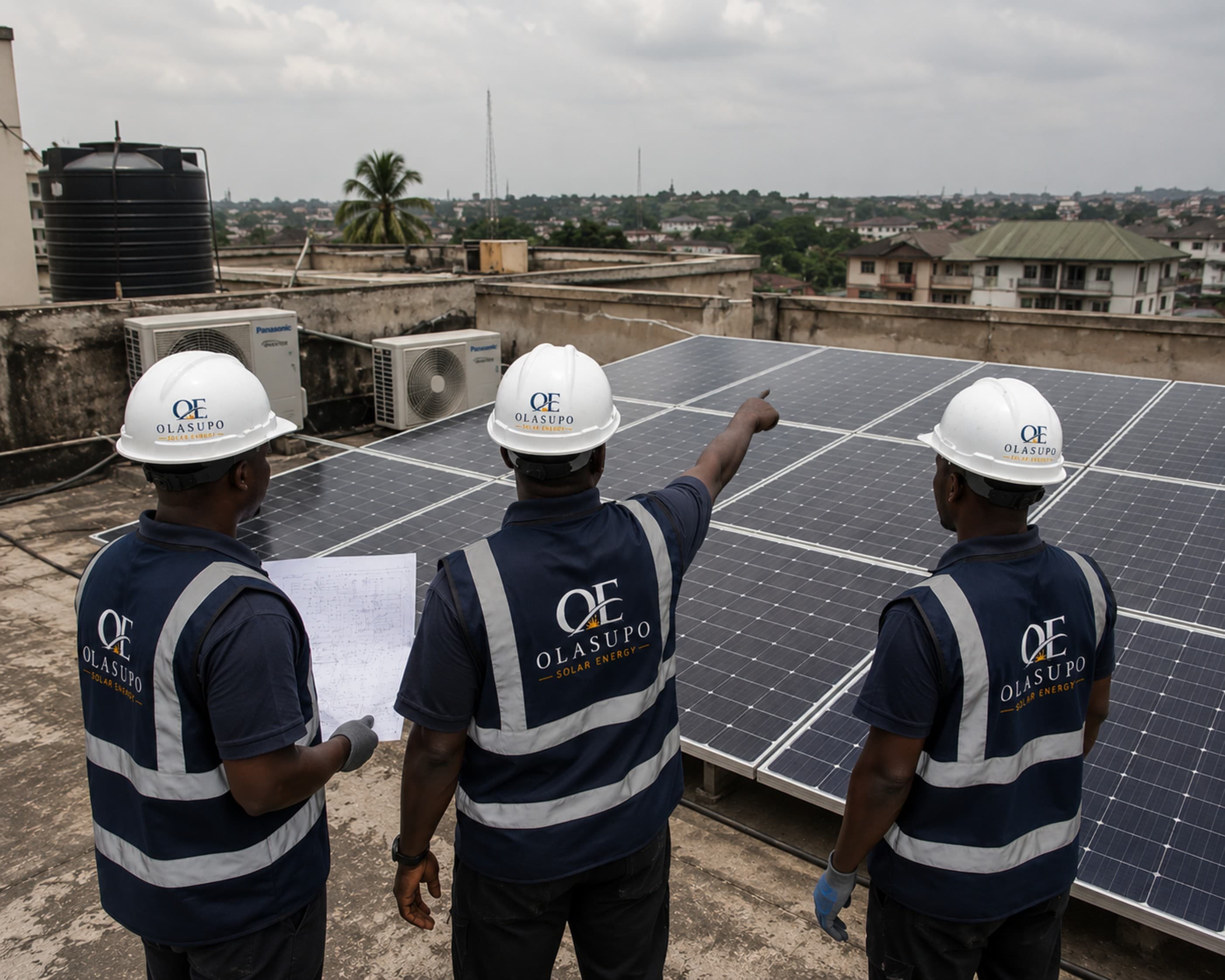
Business & Commercial
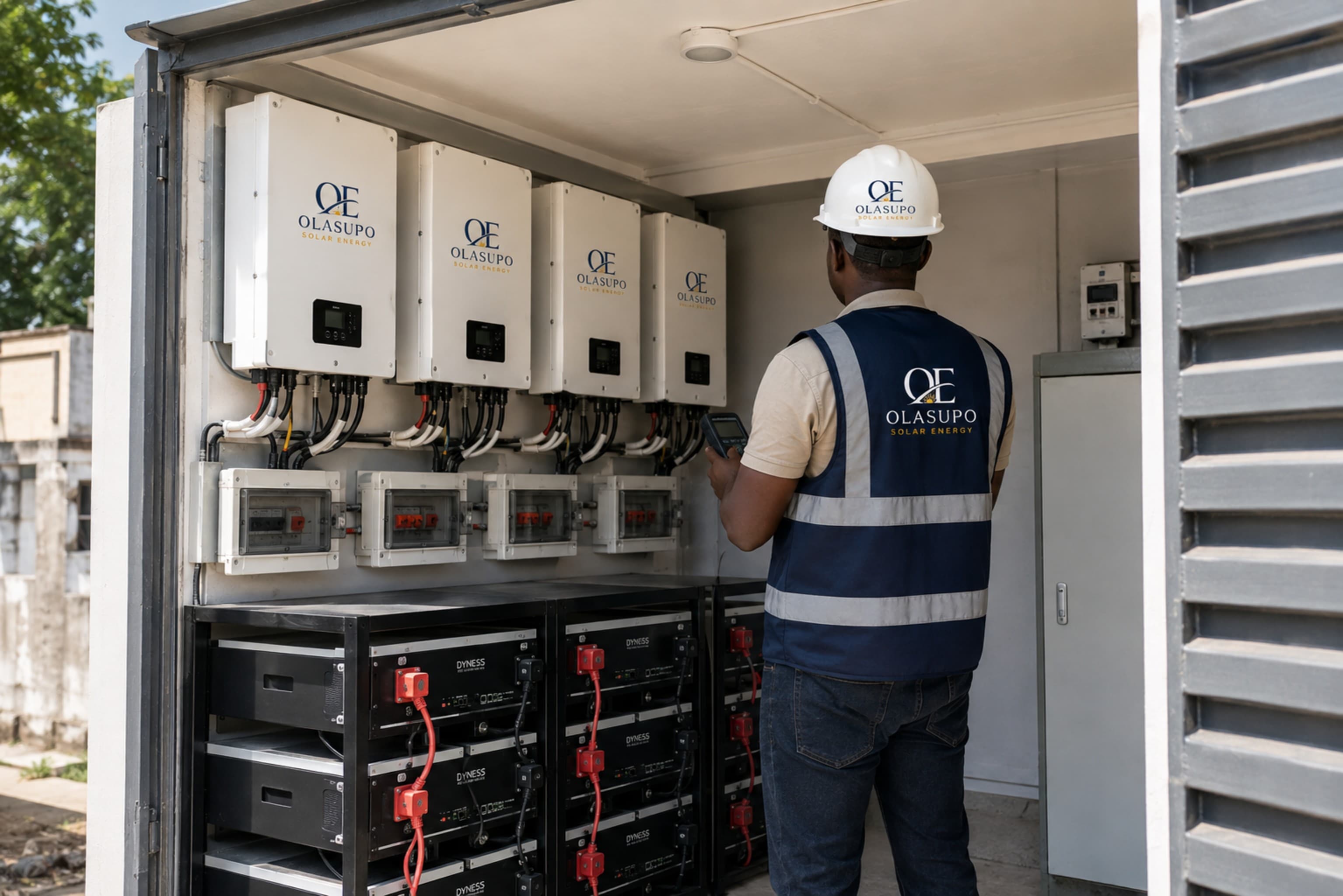
Shops, offices, hotels, and salons running on solar instead of diesel — cutting daily generator costs while keeping operations online through every outage.
Designed around your peak operating hours and equipment load
Reduces or eliminates daily diesel generator running costs
Flexible financing available with little to no upfront cost
18–30 mo
typical payback
100%
uptime through outages
Farms & Agribusiness
Irrigation pumps, cold rooms, and milling equipment powered without fuel — protecting perishable stock and keeping farm operations running on schedule, rain or shine.
Solar-powered irrigation pumps that run without diesel refills
Cold storage kept online to protect perishable harvests
Sized for milling, drying, and other processing equipment
0
diesel refills needed
20+ yrs
panel lifespan
Manufacturing & Factories
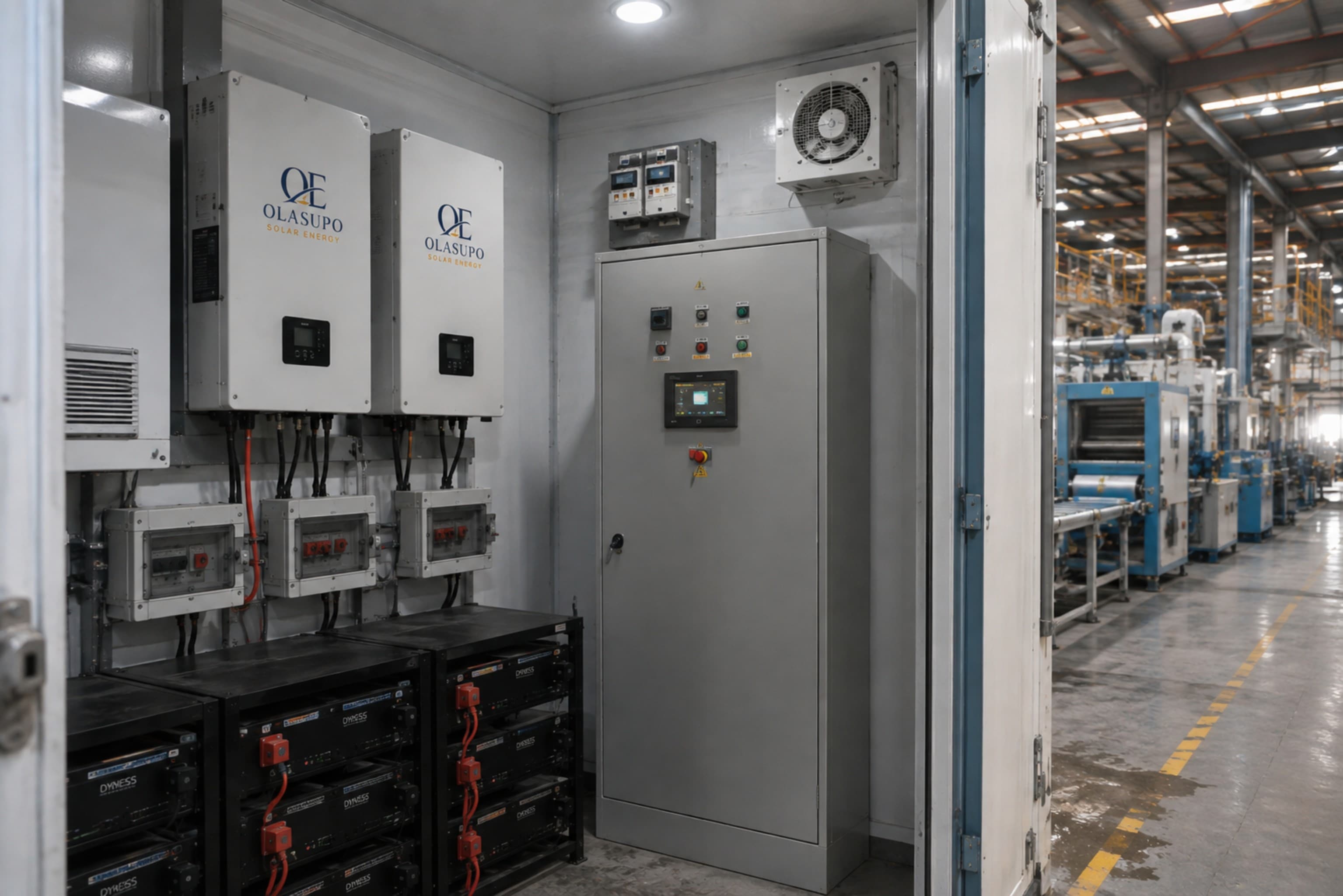
Full production lines and heavy machinery on hybrid solar systems — engineered in-house for factory-scale loads, from 100kw sites up to multi-megawatt installations.
Systems sized from 100kw up to 5MW for industrial loads
Installed with zero interruption to ongoing production
Hybrid battery and inverter setup for round-the-clock power
100kw–5MW
system range
8–12 wks
install time (500kw)
Nationwide, With Crews Who Know the Terrain
A solar company that's never worked in your state will still take your money — they'll just subcontract the actual installation to someone who has, and you'll pay for that extra layer without knowing it. Our own installation teams already operate across these regions, so you're working with people who know the local grid conditions, council requirements, and logistics — not a name subcontracted in from somewhere else.

Tools & Guides
Commercial Solar in Nigeria — Common Questions
What is commercial solar and how is it different from home solar?
Commercial solar refers to larger-scale systems (typically 50kw and above) designed for business electrical loads — factories, hotels, hospitals, schools, and similar facilities. Olasupo Energy works exclusively in this space, not residential/home solar, because commercial systems have different sizing, financing, and installation requirements.
How much does commercial solar cost in Nigeria?
Commercial solar system costs in Nigeria typically range from ₦30,000,000 for a small 100kw system to ₦600,000,000+ for a 1MW+ installation, depending on your facility's load, generator capacity, and battery storage needs. See our full cost breakdown on the ROI calculator page.
Is Olasupo Energy the installer, or does it work with third-party installers?
We are the installer. Our own engineers design your system, we source the equipment direct from manufacturers, and our own certified technicians handle installation and commissioning. We don't subcontract the work out — the team that designs your system is the team that builds it.
How do you keep costs lower than resellers?
We source panels, inverters, and batteries direct from manufacturers instead of buying through a reseller chain, and we handle design and installation with our own team instead of subcontracting. Cutting out those extra layers is what keeps our pricing below a typical reseller quote for the same equipment.
Which parts of Nigeria do you cover?
Our installation teams operate across Lagos, Abuja, Port Harcourt, Kano, Ibadan, Enugu, Kaduna, Warri, Benin City, and beyond, with crews who know the local grid conditions and council requirements in each region.
How long does it take to go from enquiry to an installed system?
From your first WhatsApp message to a signed contract typically takes 2–3 weeks, including our free site assessment and system design. Installation then takes 4–12 weeks depending on system size, so most clients are fully operational on solar within 6–15 weeks of first contact.
Your Diesel Bill Isn't Going Back Down
Message us on WhatsApp with what you're running and what you're spending. Our engineers assess your facility, design the right system, and install it — start to finish, with our own team.
WhatsApp Olasupo EnergyAverage response time: under 5 minutes during business hours