How to Reduce School Generator Cost in Nigeria
Seven practical ways Nigerian schools are cutting generator and diesel spend in 2026 — starting with the changes you can make this term, and ending with the one change that removes the biggest chunk of the bill for good.
Prices last verified: 2026-10-20.
7
cost-cutting strategies
Up to 70%
generator cost reduced with solar
5 min
to get your free assessment started
Why Generator Cost Is Eating Into School Budgets
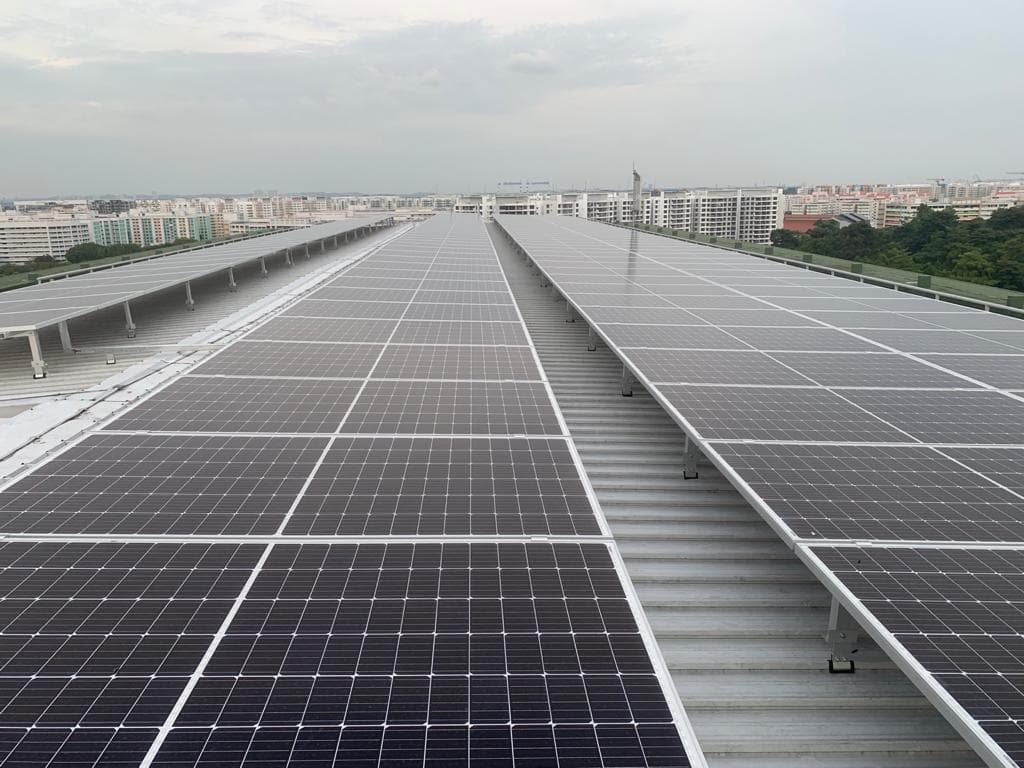
A typical private secondary school running a 60kva–150kva generator spends between ₦1,200,000 and ₦4,500,000 every month on diesel during term, and boarding schools and universities spend considerably more. Following subsidy removal, that figure has climbed sharply, and it now sits alongside salaries and feeding as one of the biggest running costs a bursar has to manage. Because schools use most of their power in the daytime — classrooms, labs, offices, borehole pumps — a large share of that diesel can be replaced with solar without changing how the school runs. Our solar for schools page covers the full picture; this guide focuses on cutting the generator bill.

7 Ways to Reduce School Generator Cost
Ranked roughly by how much of the generator bill each one typically removes, based on the schools we work with.
Switch your daytime load to commercial solar
Biggest ImpactThis is the single largest reduction available to most schools — typically 50–70% of monthly diesel spend for day schools once a correctly sized system is running, because classrooms, labs, offices, and borehole pumps all draw their power between roughly 7am and 4pm, exactly when solar produces the most. Boarding schools see a smaller percentage because of night load, which is where battery storage comes in.
Right-size your generator to your actual load
Many schools run a generator sized for the one day a year every system is on at once, even though most of the term the campus draws a fraction of that. An electrical audit often finds a smaller, better-tuned generator (or a smaller generator paired with solar) burns far less fuel per hour of school.
Put your generator on a proper maintenance schedule
A poorly maintained generator burns noticeably more fuel per kwh than one on a disciplined service schedule — clogged filters, wrong oil viscosity, and injector wear are common, quiet cost inflators. Schedule servicing during the long holiday so the generator is in good shape when the term resumes.
Stagger your heavy loads
Borehole pumps, air conditioners, the computer lab, the school kitchen, and workshop equipment starting at the same moment create inrush spikes that force you to run a bigger generator than you really need. Staggering start times, and pumping water earlier in the day, lets a smaller generator carry the same campus.
Switch to LED lighting and efficient cooling
Fluorescent tubes, old air conditioners, and inefficient fans draw meaningfully more power than modern alternatives. This won't match solar's impact, but it lowers the baseline load that both your generator and any future solar system have to cover.
Track diesel per term and per student, not just the monthly bill
A flat monthly diesel figure hides waste, leakage, and theft. Tracking litres burned per school day, and diesel cost per student per term, shows you where the money is actually going and gives the proprietor or board a number they can hold against a target.
Negotiate bulk diesel supply before term starts
For schools not yet ready for solar, buying diesel in bulk under a fixed-price arrangement with a reliable vendor can smooth out the worst of the price volatility across a term — though it doesn't reduce the underlying cost the way solar does.
We Design the Solar Piece, In-House
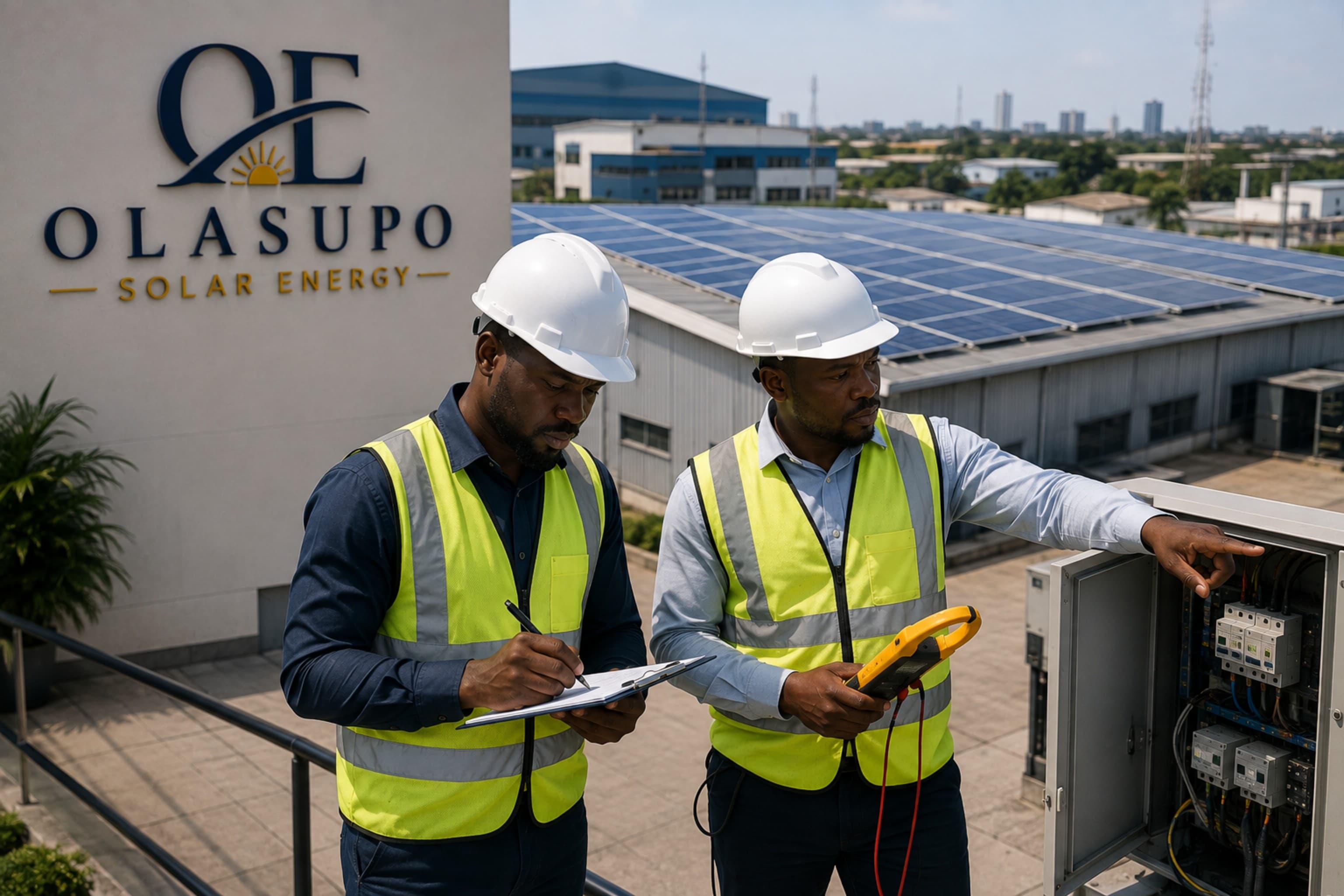
Many Nigerian schools overpay for solar because they buy through resellers who layer markup on top of generic, oversized systems. Olasupo Energy is a commercial solar installation company, not a broker — we design every system ourselves around your school's actual load, source the equipment, and install and commission it with our own engineers.
In-house engineering & design
Our engineers size and design every system to your school's real load profile — not a generic off-the-shelf package.
Sourced direct from manufacturers
We buy panels, inverters, and batteries direct from tier-1 manufacturers, cutting out reseller markup on your system.
Installed by our own crews
Our certified technicians install and commission every project, and we schedule rooftop work around lessons and holidays to keep disruption low.
Warranty & maintenance, in-house
Every system carries our workmanship warranty, and our team handles ongoing monitoring and maintenance after commissioning.
What Solar Actually Saves — By School Size
A rough guide to system cost and generator savings by school size, so you can see roughly where your campus lands before requesting a full assessment. For per-kW pricing, see our solar installation cost per kW guide.
Prices last verified: 2026-10-20.
30kw System
Small private schools and nursery/primary schools, 40kva–80kva generators
100kw System
Mid-size secondary schools and day campuses, 100kva–200kva generators
300kw+ System
Boarding schools, universities, and large campuses, 400kva+ generators
Calculate Your School's Generator Savings
Enter your current diesel spend and generator size to see exactly how much your school saves by switching part of its power to commercial solar. Want the full cost-versus-cost view? See our diesel vs solar cost comparison.
Commercial Solar ROI Calculator
See exactly how much your business saves by going solar
SELECT FACILITY TYPE
How Olasupo Energy Gets Your School Off Diesel
Tell Us Your Numbers
Message us on WhatsApp with your generator size and current monthly diesel spend. Takes 5 minutes.
Free Site Assessment
Our own engineers visit the campus and assess your rooftops, electrical load, borehole pumps, and existing generator setup — at no cost.
We Design & Propose
Our in-house team designs a system sized to your real load and sends a transparent, itemized proposal with expected savings.
We Install & Commission
Our installation crews build and commission the system, timing the heavy work for holidays and weekends to avoid disrupting classes.

Systems We've Designed, Supplied, and Installed
Olasupo Energy builds commercial and industrial solar systems in-house — here's a look at the range of work, including campuses that have already cut their generator bill.
Home Solar
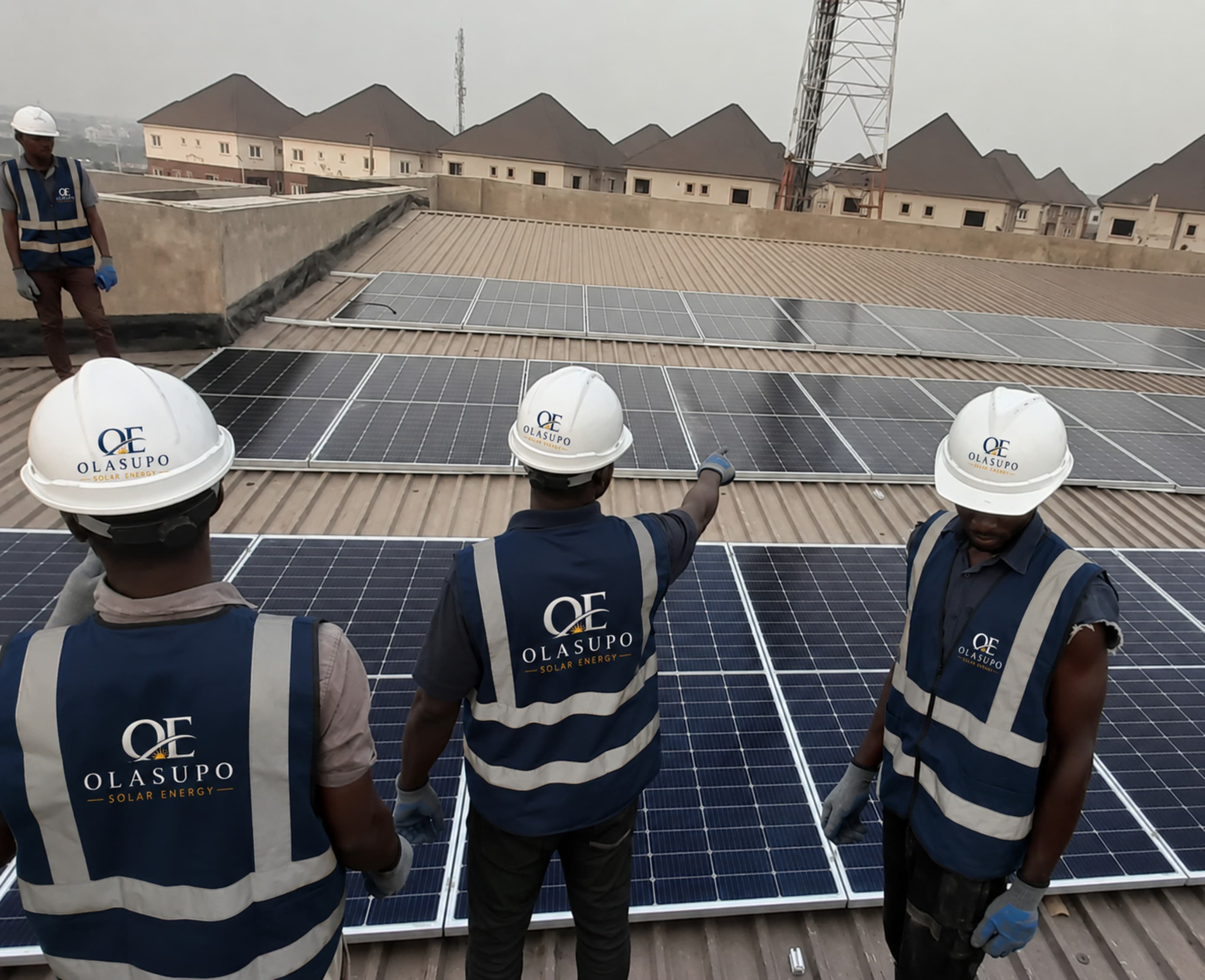
Rooftop solar systems that keep lights, fans, fridges, and home offices running through outages — sized to your household's real daily usage, not a generic package.
Backup power for essential appliances during grid outages
Battery storage sized to your household's overnight needs
Installed and commissioned by our own certified technicians
3–7 days
typical install time
10+ yrs
warranty coverage
Business & Commercial
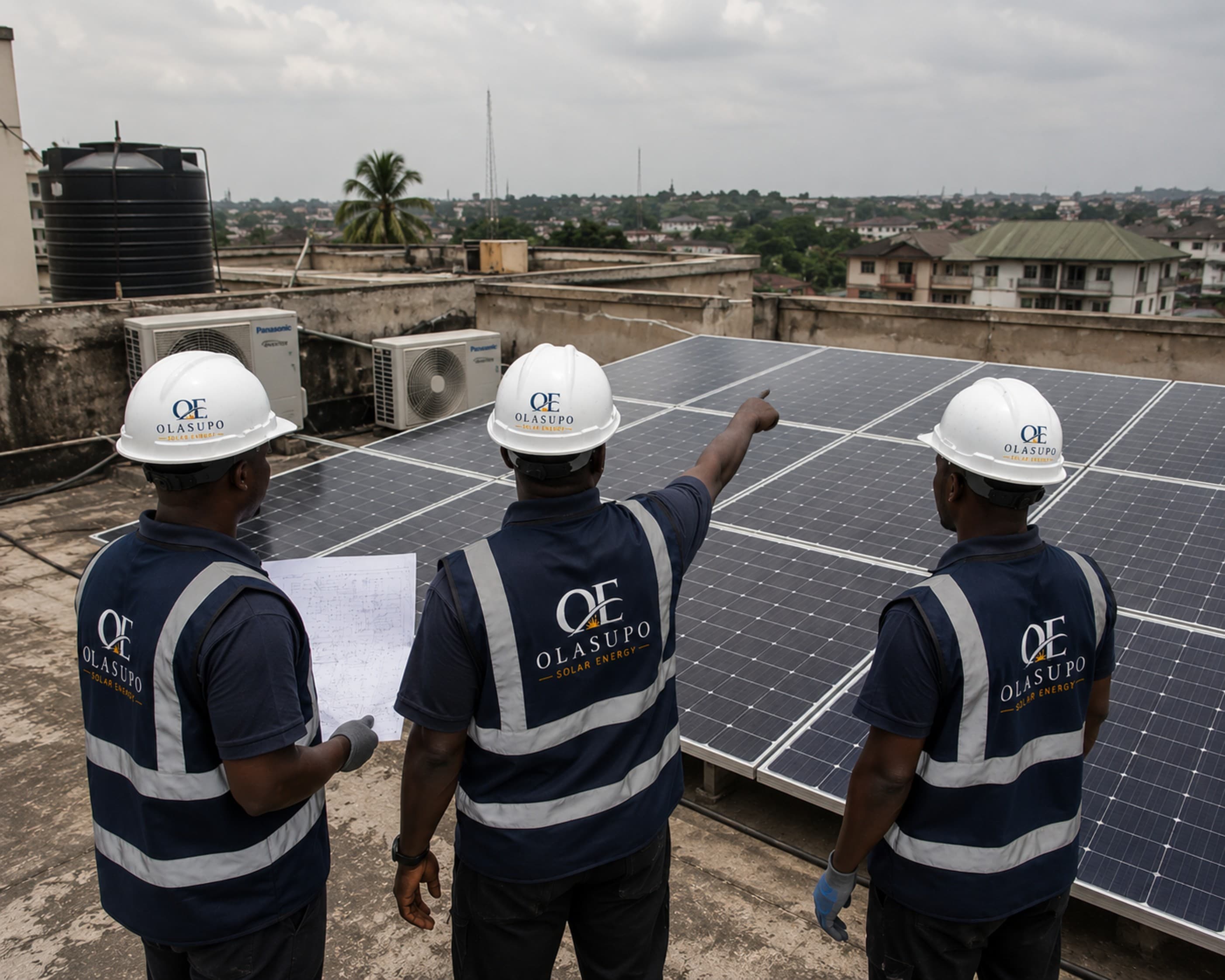
Shops, offices, hotels, and salons running on solar instead of diesel — cutting daily generator costs while keeping operations online through every outage.
Designed around your peak operating hours and equipment load
Reduces or eliminates daily diesel generator running costs
Flexible financing available with little to no upfront cost
18–30 mo
typical payback
100%
uptime through outages
Farms & Agribusiness
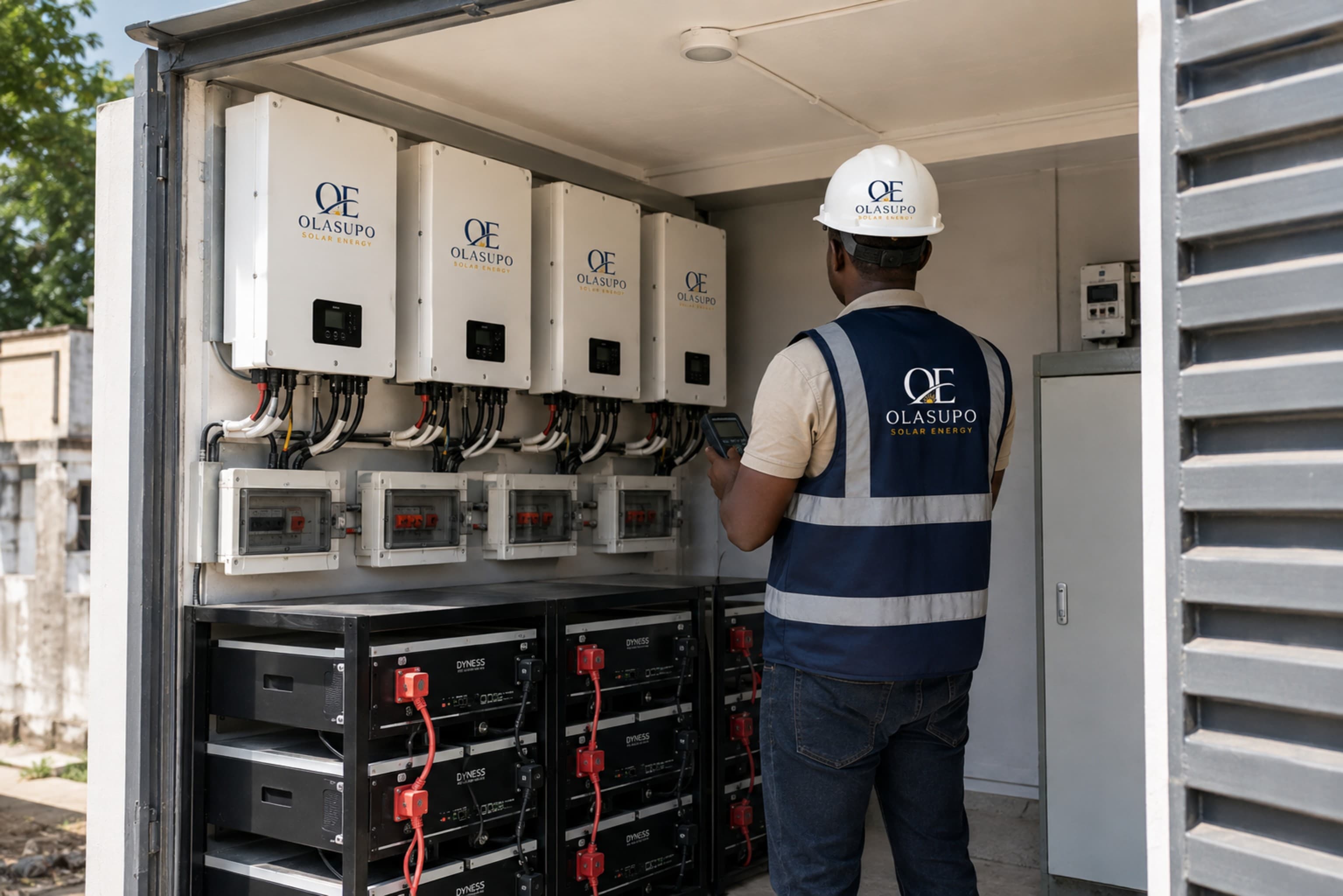
Irrigation pumps, cold rooms, and milling equipment powered without fuel — protecting perishable stock and keeping farm operations running on schedule, rain or shine.
Solar-powered irrigation pumps that run without diesel refills
Cold storage kept online to protect perishable harvests
Sized for milling, drying, and other processing equipment
0
diesel refills needed
20+ yrs
panel lifespan
Manufacturing & Factories
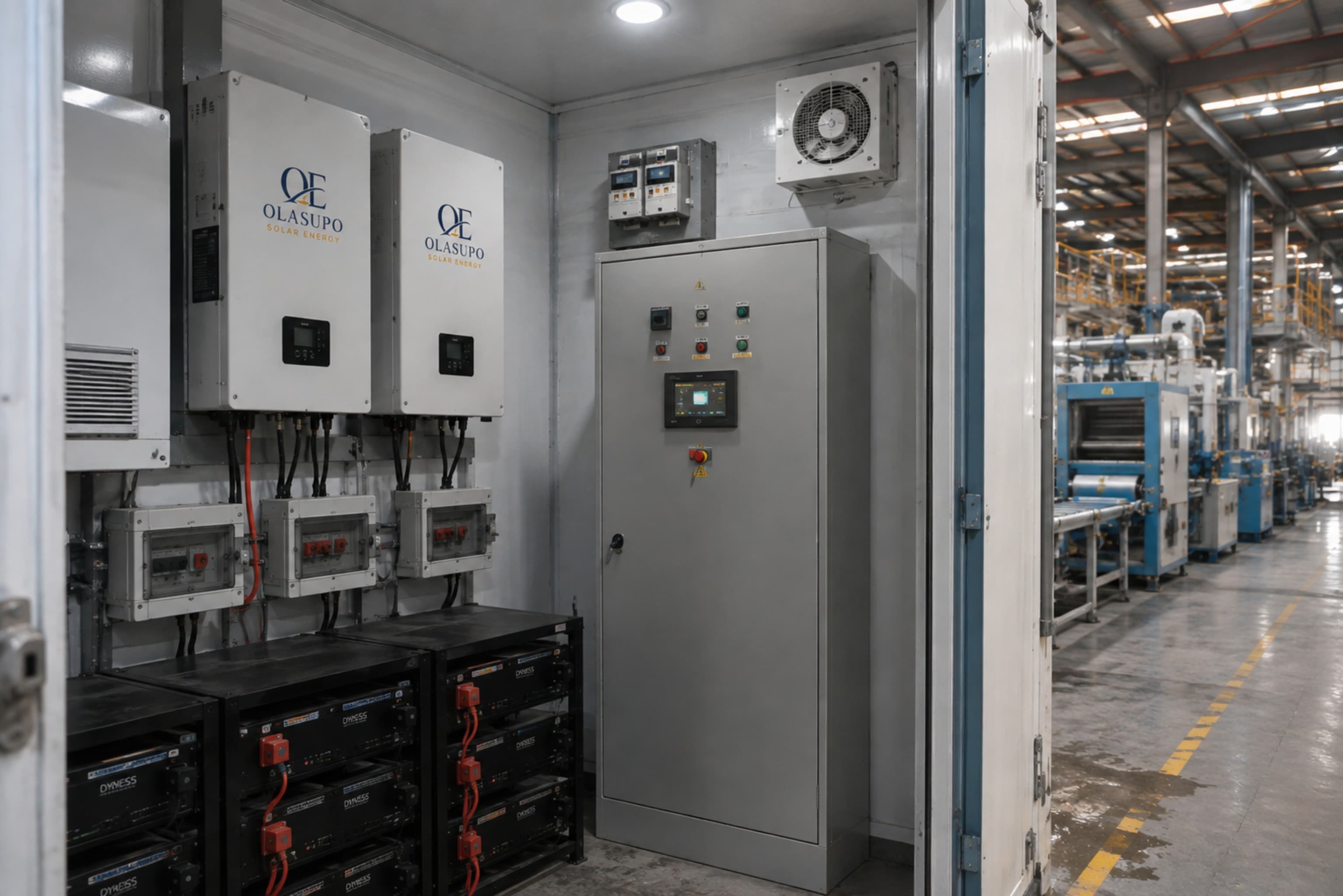
Full production lines and heavy machinery on hybrid solar systems — engineered in-house for factory-scale loads, from 100kw sites up to multi-megawatt installations.
Systems sized from 100kw up to 5MW for industrial loads
Installed with zero interruption to ongoing production
Hybrid battery and inverter setup for round-the-clock power
100kw–5MW
system range
8–12 wks
install time (500kw)
Looking for Something More Specific?
If your institution fits one of these more closely, these pages go deeper.
Solar for Schools
The full school solar landing page, with system sizes and process details.
Private Schools
For proprietor-run schools watching the termly budget closely.
Boarding Schools
For campuses with dormitory, kitchen, and night-time power needs.
Universities
For large campuses with lecture halls, labs, hostels, and admin blocks.
Polytechnics
For technical institutions running workshops and heavy equipment.
Hostel Owners
A back-to-school solar guide for student hostel owners.
Helpful Reading Before You Decide
What School Owners and Bursars Say
"REPLACE_WITH_REAL_REVIEW — e.g. what changed in the school's diesel bill after solar."
REPLACE_WITH_REAL_NAME
Proprietor, Private Secondary School, Lagos
"REPLACE_WITH_REAL_REVIEW — e.g. how the installation was scheduled around the term."
REPLACE_WITH_REAL_NAME
Bursar, Boarding School, Ogun
"REPLACE_WITH_REAL_REVIEW — e.g. how the ROI calculator compared with actual bills."
REPLACE_WITH_REAL_NAME
Administrator, Private University, Abuja
Reviews collected directly from Olasupo Energy clients. Names and institutions shown with permission.
School Generator Cost Questions — Answered
What's the fastest way to cut school generator cost in Nigeria?
A proper maintenance schedule, staggered heavy loads, and right-sizing your generator give the quickest, cheapest wins, but the single largest reduction — typically 50–70% of monthly diesel spend for a day school — comes from switching your daytime load to commercial solar.
How much does commercial solar cost for a Nigerian school?
Costs range from around ₦11,000,000 for a 30kw system suited to a small private school, up to ₦190,000,000+ for a 300kw+ system for a large boarding school or campus. The right size depends on your generator capacity and load profile — contact us for a free property-specific assessment.
Does solar still make sense if the school is empty during holidays?
Yes. Term-time diesel is where most of the saving comes from, and a system keeps its value across its 20+ year panel life. Holiday periods lengthen the payback slightly compared with a factory that runs year-round, which is why we size the system to your term-time daytime load rather than to peak demand.
Will solar power a boarding school at night?
Solar covers the daytime load directly. For evenings and nights, we can add battery storage, or keep a smaller generator as backup for night load. Most boarding schools choose a hybrid system, which we size after looking at your dormitory and kitchen load.
Do I need to replace my generator if I install solar?
No. Most of our installations run as a hybrid system — solar covers daytime load, and your existing generator (often a smaller one than before) stays as backup for nighttime, cloudy days, or peak demand.
How long before a solar system pays for itself?
Most commercial installations pay for themselves through diesel savings within 3–5 years, depending on system size and current fuel spend, and then continue saving for the 20+ year lifespan of the panels. Use the calculator above with your own numbers for a specific estimate, or ask us about financing options.
We Help Schools Cut Generator Cost Nationwide
We design, supply, and install commercial solar for schools and campuses across Nigeria — Lagos, Abuja, Kano, Ibadan, Ogun, Port Harcourt, and beyond. Every project team knows the local grid conditions and installation logistics in your area.

Ready to Cut Your School's Generator Bill?
Message us on WhatsApp. Our engineers assess your campus, show you exactly how much solar would save, and design a system around your real load. Free assessment. No obligation.
WhatsApp Olasupo Energy —Average response time: under 5 minutes during business hours